



.svg)
.svg)





The Ultimate Guide to Choosing an Event App in 2026
 Event technology has become the foundation of the modern attendee experience. From registration and content discovery to networking, exhibitor engagement, and venue navigation, the technology stack behind an event plays a critical role in its success.
With hundreds of event technology providers available, selecting the right solutions can feel overwhelming. Many platforms offer overlapping functionality, while new innovations continue to reshape attendee expectations.
At Pointr, we've worked with some of the world's largest conferences, trade shows, and convention centers. One thing has become clear: the best event technology isn't necessarily the platform with the most features. It's the technology that removes friction, improves engagement, and helps attendees get the most value from their time onsite.
Whether you're planning a conference, trade show, convention, user conference, or corporate event, here are the key considerations when evaluating your event technology ecosystem.
What Makes a Great Event App?
A great event app is more than a digital agenda. It serves as the central connection point between attendees, organizers, exhibitors, sponsors, and the venue itself.
When evaluating an event app, organizers should look beyond a simple feature checklist and focus on the entire attendee journey. The best platforms support attendees before, during, and after the event by making it easier to discover content, connect with others, engage with exhibitors, and navigate the venue.
Key capabilities to consider include:
-
Registration & onboarding: Integrations with registration platforms, personalized attendee profiles, single sign-on, digital tickets, and streamlined check-in experiences.
-
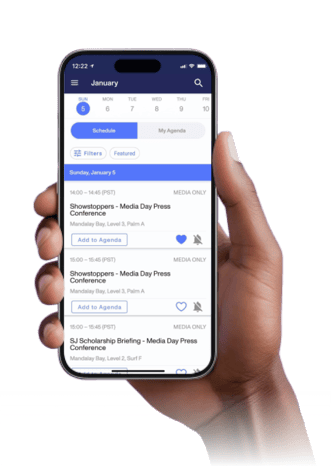
Agenda & content discovery: Personalized agendas, session recommendations, speaker profiles, search and filtering, favorites, calendar syncing, and real-time schedule updates.
-
Networking: AI matchmaking, attendee profiles, messaging, meeting scheduling, and community engagement tools that help attendees build meaningful connections.
-
Exhibitor & sponsor engagement: Searchable exhibitor directories, sponsor profiles, product categories, featured placements, sponsored content, and lead generation opportunities.
-
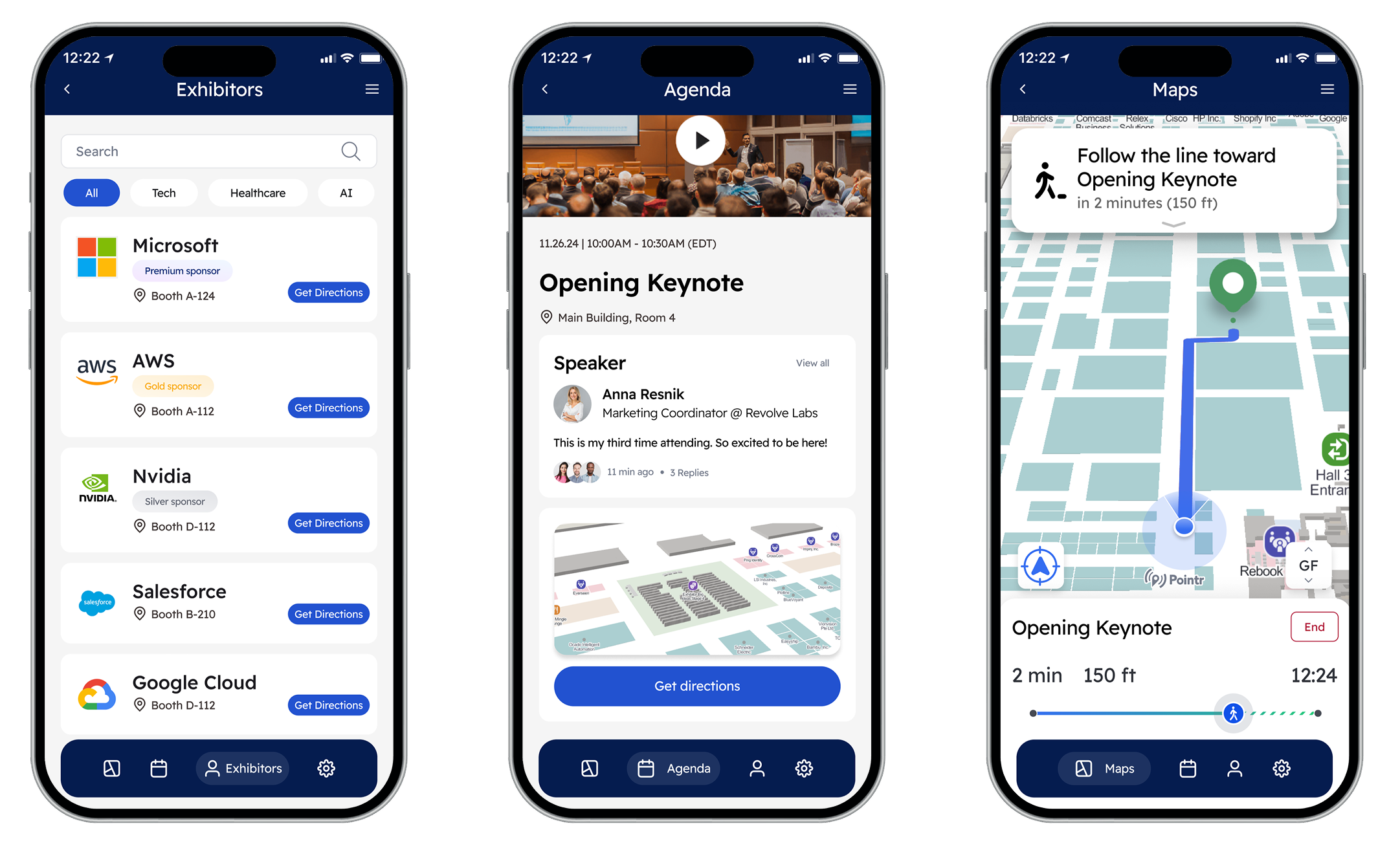
Navigation & wayfinding: Interactive maps, indoor navigation, exhibitor search, meeting room directions, multi-building navigation, and accessibility routes that connect the digital and physical event experience.
-
Notifications: Push notifications, schedule updates, emergency communications, and personalized reminders that keep attendees informed throughout the event.
-
AI-powered experiences: AI assistants, smart search, personalized recommendations, matchmaking, and content summaries that help attendees find relevant information faster.
-
Analytics & reporting: Insights into app adoption, session popularity, exhibitor engagement, navigation behavior, and sponsor performance.
The strongest event apps are not defined by the number of features they offer. They are defined by how effectively those features work together to create a seamless, connected attendee experience.
Native App vs. Web App vs. White-Label Native App
When selecting an event app, organizers must consider the type of experience they want to create. Web apps, native apps, and white-label native apps each offer different benefits depending on event size, attendee expectations, and required functionality.
Web Apps
Web apps provide event access through a browser without requiring a download.
Advantages:
-
No download required
-
Easy updates
-
Lower cost
-
Accessible across devices
Limitations:
-
Limited offline functionality
-
Fewer device capabilities
-
Lower engagement
-
Limited push notifications
Best for: Small meetings, internal events, and simple attendee experiences.
Native Apps
Native apps are downloaded through app stores and provide a more robust mobile experience.
Advantages:
-
Fast performance
-
Push notifications
-
Offline support
-
Better user experience
-
Access to device features like location services
Limitations:
-
Requires an app download
-
Higher development costs if built independently
Best for: Large conferences, conventions, trade shows, and annual events where engagement is a priority.
White-Label Native Apps
.png?width=318&height=449&name=%E2%80%9CShould%20I%20build%20my%20own%20Event%20App%E2%80%9D%20section%20(1).png)
White-label native apps have become the enterprise standard because they combine native performance with a fully customizable experience.
Benefits:
-
Fully branded attendee experience
-
Custom App Store presence
-
Native functionality
-
Faster deployment than building from scratch
-
No need for an internal mobile development team
Platforms including Eventbase offer white-label native app solutions designed for enterprise events.
For most large-scale events, a white-label native app provides the best balance of customization, scalability, and attendee engagement. The right choice ultimately depends on your event goals, audience, and the experience you want to deliver.
Should You Build or Buy an Event App?
One of the most common questions event organizers face is whether to build a custom event app or partner with an established platform.
While building an app provides complete control, it also requires significant investment in development, security, maintenance, and ongoing updates. For most organizations, purchasing a proven event app platform offers a faster, more scalable, and cost-effective solution.
|
Consideration |
Build In-House |
Buy a Platform |
|
Cost |
High upfront investment |
Predictable licensing model |
|
Timeline |
Months or years to develop |
Faster deployment |
|
Resources |
Requires engineering, QA, and security teams |
Vendor-managed platform and support |
|
Maintenance |
Continuous updates and App Store management |
Included with platform updates |
|
Innovation |
Built internally |
Continuous improvements from provider |
|
Customization |
Complete control |
Configurable enterprise experiences |
Building internally may make sense for organizations where event technology is a core part of their business. However, most event organizers benefit from using an established platform that already supports the features attendees expect, including networking, personalization, integrations, analytics, and connected venue experiences.
By choosing a proven event app provider, organizers can focus on creating engaging events while relying on technology partners for development, security, maintenance, and ongoing innovation.
Questions to Ask Every Event App Vendor
Choosing the right event app requires looking beyond a list of features. During demos and RFP evaluations, organizers should focus on how the platform supports the full attendee journey and integrates with their broader event technology ecosystem.
Key questions to ask include:
-
Is the platform native, web-based, or both?
-
Is a white-label version available for a fully branded experience?
-
What integrations are supported with registration, CRM, marketing, and event technology platforms?
-
Does the platform support interactive maps and indoor navigation?
-
Is Blue Dot navigation available for real-time attendee guidance?
-
What AI capabilities are included, such as recommendations, search, or matchmaking?
-
How customizable is the app branding and user experience?
-
What analytics and reporting capabilities are available?
-
How do networking features help attendees connect?
-
Can the platform scale across multiple events, locations, or global programs?
-
What level of support is provided before, during, and after the event?
The right event app should not only meet today's needs but also support future growth. By asking these questions, organizers can better evaluate which platform will create the most connected, engaging, and seamless experience for attendees, exhibitors, and sponsors.
Creating a Connected Event Experience with Interactive Maps
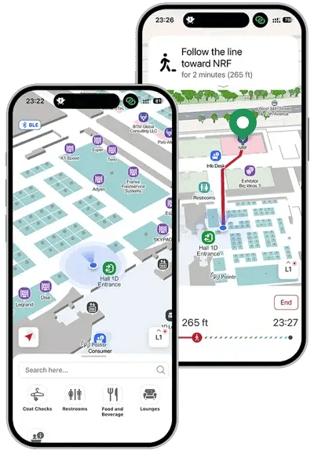 The future of event technology is about creating connected experiences where every part of the attendee journey works together. Rather than forcing attendees to switch between multiple platforms, organizers are bringing registration, event apps, networking, exhibitor tools, analytics, and venue technology together into one seamless experience.
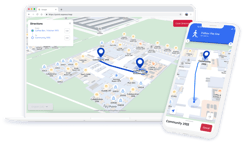
One of the biggest opportunities to improve the attendee experience is connecting the digital event experience with the physical venue through interactive maps.
For years, event maps have been limited to printed floor plans, PDFs, static booth lists, and paper signage. While these resources provide basic information, they require attendees to figure out where they need to go and how to get there on their own.
Interactive maps transform maps from simple references into engagement tools by helping attendees discover, navigate, and interact with the event.
Instead of static information, interactive maps can provide:
-
Searchable exhibitor directories
-
Session and meeting room discovery
-
Accessible routing options
-
Meeting point directions
-
Parking guidance
-
Food and beverage locations
-
Restroom and amenity information
-
Sponsor activations
When integrated directly into an event app, attendees can move seamlessly from discovery to action. They can find a session, locate an exhibitor, view their destination, and receive directions without leaving the app experience.
This creates value for everyone involved. Attendees spend less time searching and more time engaging with content, exhibitors, and sponsors. Exhibitors gain increased visibility and opportunities for discovery. Organizers gain a more connected experience along with insights into attendee behavior and venue engagement.
Through integrations with event technology platforms such as Eventbase, Pointr helps connect the digital and physical event experience with interactive maps, indoor navigation, and Blue Dot positioning.
As venues become larger and events become more complex, navigation is no longer just a convenience—it is a critical part of creating a seamless attendee journey.
Case Study: Eventbase + Pointr at CES
CES is one of the world's largest technology events, bringing together hundreds of thousands of attendees, thousands of exhibitors, and programming across 12 venues spanning more than 8 million square feet.
With such a large and complex footprint, helping attendees quickly find exhibitors, sessions, meeting rooms, and amenities is a major challenge. Traditional maps and static directories provide information but do not offer the real-time guidance attendees need to confidently navigate the venue.
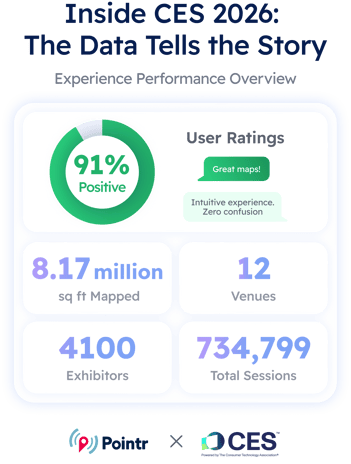
To create a more connected attendee experience, Eventbase integrated Pointr's interactive maps and Blue Dot navigation directly into the CES event app. This allowed attendees to search for exhibitors, sessions, and destinations, then navigate directly to their location without leaving the app.
The connected experience delivered:
-
700,000+ navigation sessions in 2025-2026
-
8+ million square feet mapped
-
12 connected venues
Read more here:

Final Thoughts
Choosing the right event app is about more than comparing features. The best platforms focus on the attendee journey and create a connected experience that helps people discover content, connect with others, engage with exhibitors, and navigate the venue with ease.
Organizers should prioritize integrations and how technology works together across registration, networking, analytics, and venue experiences. For large conferences and trade shows, interactive maps and wayfinding are becoming essential tools for reducing friction and helping attendees make the most of their time onsite.
The best event app is not the one with the longest feature list—it is the one that creates a seamless, intuitive experience.
Whether you're selecting a new event app or enhancing your existing platform with interactive maps and Blue Dot navigation, the goal is the same: create a connected attendee experience from a single platform.
Amanda Brown is a Marketing Specialist at Pointr, overseeing events, ABM outreach, and client initiatives. Amanda is an expert in event marketing, since joining at the end of 2023, she has managed Pointr’s event presence from start to finish, handling everything from planning and logistics to on-site execution and follow-up.